
Phlebotomy is one of the fastest ways to start a healthcare career without spending years in school. With demand for healthcare support professionals continuing to grow, many students are looking for hands-on medical careers that offer quicker training timelines and direct patient interaction.
For beginner job seekers wondering how to become a phlebotomist, this guide is here to help you explore your healthcare career options. We’ll break down the training requirements and timelines, what to expect on the job, and how the Erie Institute of Technology prepares graduates for real-world clinical environments.
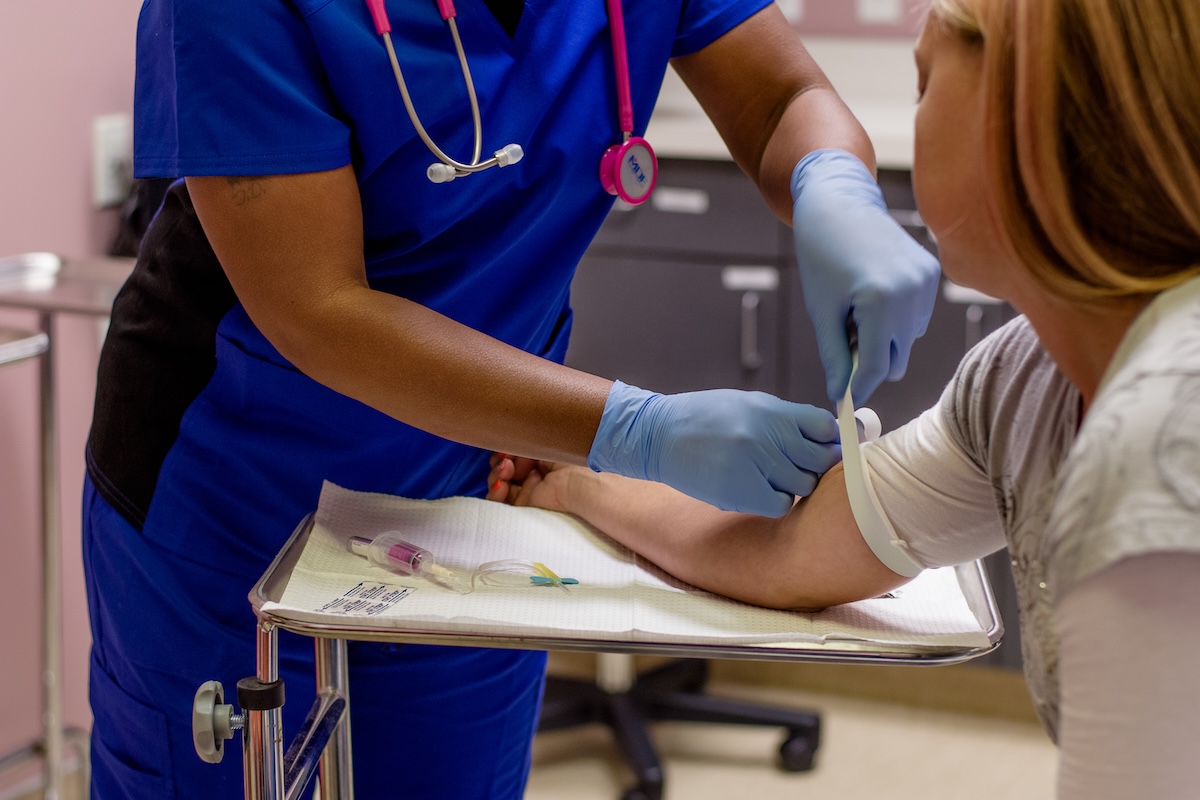
A phlebotomist is a healthcare professional trained to collect blood samples for testing, transfusions, research, or donations. They work closely with patients and medical teams to help support diagnosis and treatment.
Typical job responsibilities include:
- Drawing blood safely and accurately
- Labeling and handling specimens
- Explaining procedures to patients
- Maintaining sterile equipment
- Following healthcare safety protocols
Phlebotomist vs. Phlebotomy Technician
The terms “phlebotomist” and phlebotomy technician are often used interchangeably. In most cases, both roles involve collecting blood samples and working with laboratory procedures. Some employers may use “technician” to describe professionals with broader laboratory support responsibilities or additional certifications.
Work Settings for Phlebotomists
Phlebotomists often work in fast-paced healthcare settings and interact with patients throughout the day. Schedules can vary depending on the employer.
Many phlebotomists work in:
- Hospitals
- Medical laboratories
- Physician offices
- Blood banks
- Outpatient clinics
Training Program Length
Most students complete the Phlebotomy Technician Training Program in 6 months, depending on scheduling. The program includes:
- Classroom instruction
- Laboratory practice
- Clinical training or externships
- Certification preparation
Over the course of the program, students learn:
- Blood collection techniques
- Infection control
- Anatomy and physiology basics
- Patient communication
- Medical terminology
Certification Timeline After Training
Pennsylvania does not currently require state licensure for phlebotomists. However, many employers prefer or require national certification.
Many prospective students wonder, “Do you need to become a medical assistant to be a phlebotomist?” The answer is no. You do not need prior medical assistant training to begin phlebotomy education. Many students enter phlebotomy programs with little or no healthcare experience.
Academic Prerequisites
Typical academic prerequisites include a high school diploma or GED, along with basic knowledge of biology and math. Strong communication skills are also needed to succeed in the training program.
Health and Physical Requirements
Phlebotomists spend much of the day standing, interacting with patients, and handling medical equipment. Students should be comfortable with direct patient interaction, blood collection procedures, meet minimum age requirements, and pass a background check.
If you’re ready to explore a medical career training program that focuses on practical healthcare skills, phlebotomy offers a direct path into the field without a lengthy degree program.
Step 1 - Complete an Accredited Training Program
The first step is enrolling in a phlebotomy training program that includes both classroom instruction and hands-on practice.
A strong phlebotomy certification program should include:
- Blood collection procedures
- Infection control and safety
- Anatomy and physiology basics
- Clinical laboratory procedures
- Patient care communication
- Certification exam preparation
Hands-on learning is especially important in healthcare training. Students benefit from practicing techniques in lab settings that mirror real clinical environments.
When comparing schools, look for one that offers:
- Experienced instructors
- Modern training equipment
- Clinical training opportunities
- Certification preparation
- Career services support
Step 2 - Gain Clinical Experience
In Erie and the surrounding areas, healthcare employers often value candidates with hands-on experience in patient care settings. Most phlebotomy programs include a clinical externship, which helps students prepare for certification exams and future job responsibilities.
Clinical experience includes:
- Practicing venipuncture procedures
- Working with patients in healthcare settings
- Following laboratory safety procedures
- Building confidence in real-world environments
Step 3 - Pass National Certification Exam
After completing training, many students pursue national certification.
Common certifying organizations include:
- American Society for Clinical Pathology (ASCP)
- National Healthcareer Association (NHA)
- National Center for Competency Testing (NCCT)
Certification exams typically cover:
- Anatomy and physiology
- Blood collection procedures
- Safety standards
- Specimen handling
- Patient interaction
While Pennsylvania does not require state licensure for phlebotomists, many employers prefer certified candidates because certification demonstrates professional competency and training.
Students considering a move out of state who are researching how to become a licensed phlebotomist should understand that some states have additional licensing or state certification requirements beyond national certification exams.
Students comparing phlebotomy schools in Erie should focus on more than just program cost. Training quality, hands-on experience, scheduling flexibility, and career support can all impact long-term success.
Choosing the Right Program
Programs with strong hands-on learning opportunities prepare students for entering clinical environments. When evaluating phlebotomy programs, consider:
- Accreditation and reputation
- Instructor experience
- Clinical training opportunities
- Certification exam preparation
- Class size
- Equipment and lab quality
- Career placement support
Financial Considerations and Aid
Phlebotomy program costs can vary depending on:
- Program length
- Certification fees
- Supplies and materials
- Clinical requirements
Many career training schools offer opportunities to offset costs, including:
- Financial aid options for qualified students
- Payment plans
- Career services assistance
Erie Institute of Technology offers career-focused technical program options designed to help you prepare for entry-level healthcare roles through practical training, certification preparation, and industry-relevant instruction.
Salary Expectations in Pennsylvania
- Phlebotomist salaries can vary by experience, certification status, and geographic location.
- Entry-level phlebotomists may earn less as they build experience, whereas professionals with additional certifications or specialized skills may qualify for higher-paying opportunities.
- Compared to some healthcare careers that require multi-year degrees, phlebotomy can offer a shorter training timeline and quicker entry into the workforce.
- According to the U.S. Bureau of Labor Statistics, the job outlook for phlebotomists is expected to grow slightly faster than average over the next 10 years.
Career Advancement Paths
For students interested in long-term growth, phlebotomy can provide valuable healthcare experience while building clinical and patient-care skills. Many phlebotomists use their experience as a starting point for broader healthcare careers.
Possible advancement opportunities may include:
- Laboratory technician roles
- Medical assisting
- Healthcare administration
- Specialized laboratory certifications
- Supervisory positions
Start Your Phlebotomy Career at Erie Institute of Technology
The right phlebotomy training can help you get on track early in your career.
At Erie Institute of Technology, students gain the knowledge and hands-on training to get ahead.
Take the first step toward your future. Enroll in EIT’s Phlebotomy Training Program today.
Do you need a college degree to become a phlebotomist?
No. Most phlebotomists complete a certificate-based training program instead of a four-year degree. A high school diploma or GED is usually the minimum educational requirement for enrollment.
How much does phlebotomy training cost?
Training costs can vary depending on the school, program length, and certification fees. Financial aid and payment plans may be available for qualified students.
Can you work as a phlebotomist without certification?
Requirements vary by state and employer. Pennsylvania does not currently require state licensure for phlebotomists, but many healthcare employers prefer or require national certification through organizations such as ASCP or NHA.
How hard is the phlebotomy certification exam?
Certification exams can be challenging, but students who complete hands-on training and prepare thoroughly are often well-positioned for success. Exams typically cover anatomy, specimen handling, infection control, and patient safety procedures.
What’s the difference between a phlebotomist and a medical assistant?
Phlebotomists specialize in blood collection and laboratory-related procedures. Medical assistants usually perform a broader mix of administrative and clinical tasks. You do not need to become a medical assistant before entering phlebotomy training.
About the Author
Ross Aresco
CFO
Ross Aresco is the CFO of Erie Institute of Technology. Erie Institute of Technology (EIT) is an Erie Pennsylvania technical/trade school providing training programs for medical, computer, electronics, manufacturing, and technology careers. EIT offers programs in many different areas to suit your interests and talents.