
CNC machining forms the foundation of modern precision manufacturing. It allows machinists to produce repeatable parts by controlling how tools and workpieces move during cutting.
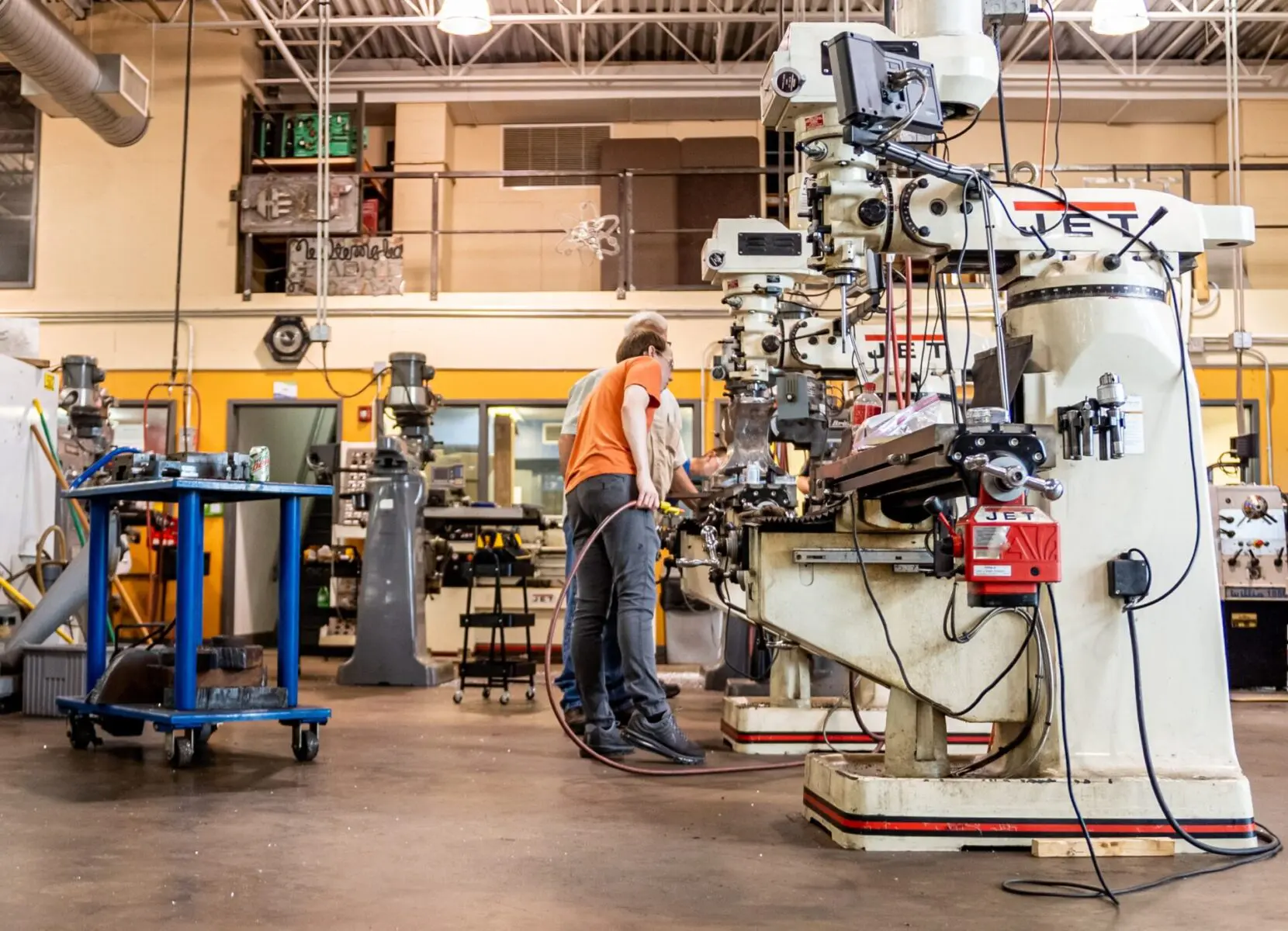
Erie Institute of Technology trains CNC machinist technicians in Erie, PA, using hands-on instruction with mills, lathes, drill presses, grinders, and CNC equipment. Below, we explain how milling, turning, and drilling work, when to use each process, and how machinists decide which process fits a part.
Article Overview: CNC Machining Process
- CNC machining processes use computer-programmed instructions to control tools that cut, shape, and drill raw materials into finished parts.
- Before modern CNC systems, machinists controlled mills, lathes, and drill presses manually. Numerical-control technology began automating machine movements in the mid-20th century and later evolved into computer numerical control.
- The three main CNC machining processes are milling, which moves a rotating cutting tool across a workpiece; turning, which rotates the workpiece against a cutting tool; and drilling, which creates cylindrical holes.
- Each process works best for different part features. Milling handles flat and contoured surfaces, turning produces round shapes, and drilling creates precise holes.
What is CNC Machining in Manufacturing?
CNC stands for Computer Numerical Control. Instead of guiding a cutting tool entirely by hand, a machinist uses programmed instructions to tell a machine where to move, how quickly to move, and how much material to remove.
Machining is a form of subtractive manufacturing. It starts with a solid piece of material, often called a workpiece or blank, and removes material until the desired shape remains. This process differs from additive manufacturing, such as 3D printing, which builds parts by adding material.
Before CNC machining, machinists operated lathes, mills, and drill presses by adjusting handwheels, levers, and controls during each operation. Modern CNC equipment automates many of those movements, helping manufacturers produce parts more consistently.
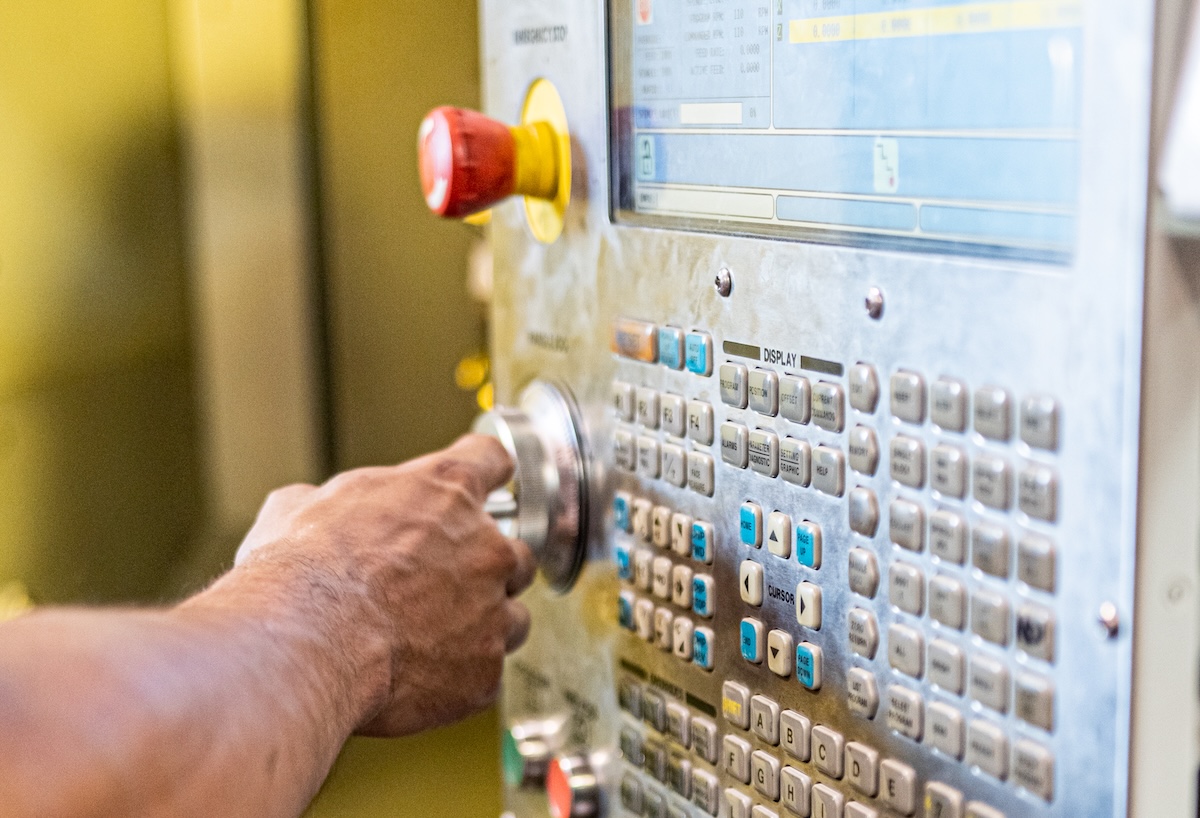
How G-Code Controls CNC Machines
Many CNC machines use instructions commonly known as G-code. These commands tell the machine where a tool should move and help control cutting conditions throughout a programmed operation. Machinists must read programs, set up equipment, check machine movements, and troubleshoot problems.
What Materials Can CNC Machines Work With?
The materials you work with affect the tooling, cutting speed, and feed rate. Common materials for CNC machining include:
- Aluminum
- Steel
- Stainless steel
- Brass
- Copper
- Titanium
- Engineering plastics, such as PEEK
CNC Milling: How It Works and When to Use It
CNC milling uses a rotating cutting tool to remove material from a secured workpiece. It is especially useful for parts with flat surfaces, slots, pockets, angled faces, and complex contours.
How CNC Milling Works
During milling, tools such as end mills and face mills move along programmed paths while the workpiece stays clamped to the machine table. A 3-axis mill moves along the X, Y, and Z axes. More advanced 5-axis machines add rotational movement, allowing machinists to produce complex surfaces with fewer setups.
Types of CNC Milling Operations
Common milling operations include:
Face milling: Creates a flat surface across the face of a workpiece.
Peripheral milling: Cuts along the tool’s circumference to create features such as slots and grooves.
Profile milling: Follows a programmed contour around or across a part.
Pocket milling: Removes material from an enclosed area within a workpiece.
When Milling Is the Right Choice
Milling is often the right choice when you can’t efficiently produce a part by rotating it. Efficient CNC machining processes also depend on good workholding. Fixtures and vises help keep parts secure and can reduce unnecessary setup changes.
CNC Turning: How It Works and When to Use It
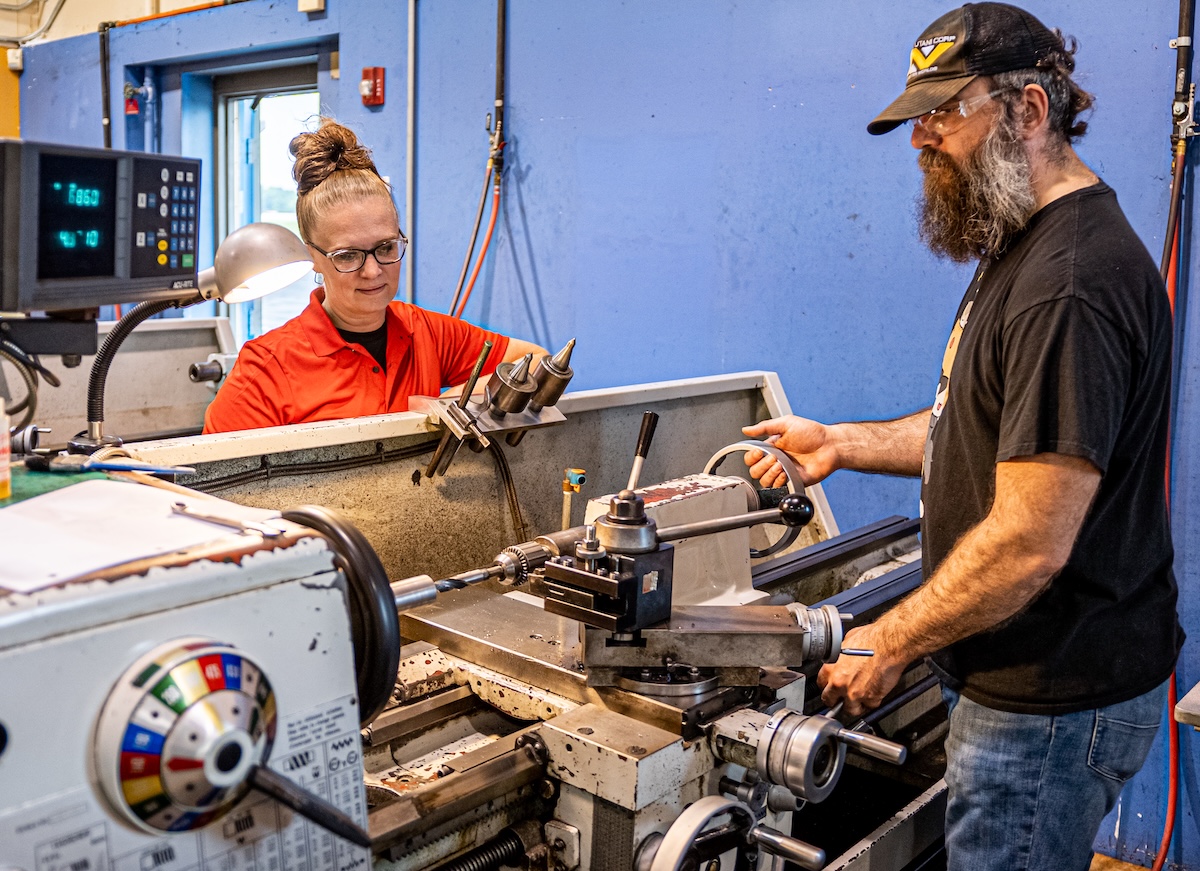
CNC turning reverses the basic movement used in milling. Instead of rotating the cutting tool, a CNC lathe rotates the workpiece while a cutting tool moves along its surface.
How CNC Turning Works
The machinist secures bar stock or another workpiece in a chuck. As the workpiece rotates, a programmed cutting tool removes material to create round features. Turning produces outside and inside diameters, tapers, grooves, and threads.
Types of CNC Turning Operations
Common turning operations include:
Facing: Produces a flat surface on the end of the workpiece.
Straight turning: Reduces the workpiece’s outside diameter to a specified size.
Grooving and parting: Cuts grooves or separates a completed part from bar stock.
Threading: Produces internal or external screw threads.
CNC Lathes vs. Turning Centers: What’s the Difference?
A basic CNC lathe is designed primarily for turning. A CNC turning center may add live tooling and additional axis control, allowing milling or drilling operations in the same setup. These machines require an understanding of multiple CNC machining processes and how their programs work together.
CNC Drilling: How It Works and When to Use It
CNC drilling creates cylindrical holes by feeding a rotating drill bit straight into a stationary workpiece. The machine controls the hole location and depth along with spindle speed and feed rate.
Drilling Operations and Hole Types
Common operations include:
Spot drilling to help position the drill
Through-hole drilling to cut completely through a part
Blind-hole drilling to stop at a programmed depth
Reaming to improve a drilled hole’s diameter and finish
How CNC Drilling Differs from Milling and Turning
Milling and drilling can occur on the same machining center, but milling moves a rotating tool across a workpiece to shape its surfaces. Drilling, by contrast, feeds the tool into the workpiece along its axis.
Advanced and Emerging CNC Machining Processes
Advanced CNC machining processes extend the fundamentals of milling, turning, and drilling. Automated equipment uses pallet systems or robots to load and unload parts, allowing some production to continue with limited operator involvement. But no matter how advanced the technology gets, skilled technicians are still needed to set up equipment, monitor production, troubleshoot problems, and adjust programs.
Sustainable CNC Machining: Reducing Waste and Energy Use
Sustainable CNC machining processes help manufacturers reduce waste and improve their operation’s energy efficiency. Shops may recycle metal chips, reduce cutting-fluid use, and optimize toolpaths to improve tool life and machining efficiency.
EDM, Grinding, and Other Advanced CNC Processes
Machinists may also encounter processes such as CNC grinding, which uses abrasive wheels for precise finishing, and electrical discharge machining (EDM), which removes material from electrically conductive workpieces using controlled electrical discharges.
How to Choose the Right CNC Machining Process
Part geometry is one of the simplest ways to determine which process to use. Below are general guidelines for selecting the right CNC machining process:
CNC Process Selection Guide by Part Geometry
| Part Feature | Best Process | Common Example |
|---|---|---|
| Flat surfaces, slots, or pockets | CNC milling | Bracket or housing |
| Cylindrical or conical shapes | CNC turning | Shaft or rod |
| Standard round holes | CNC drilling | Bolt or clearance hole |
| High-precision existing holes | Boring | Bearing bore |
| Hardened parts requiring fine finishes | CNC grinding | Precision shaft |
Become a CNC Machinist in Erie, PA
Understanding the different types of CNC machining is an important first step toward working with modern manufacturing equipment. Hands-on training comes next.
CNC Machinist Technician Program at Erie Institute of Technology
Length: 9 months
Diploma
Erie Institute of Technology’s 9-month CNC Machinist Technician Program teaches you to set up, program, operate, inspect, and troubleshoot CNC equipment so you’re fully prepared and confident to start your machinist career.
Apply online or schedule a tour to take the next step.
CNC Process Frequently Asked Questions (FAQs)
What are the three main CNC machining processes in precision manufacturing?
The three main CNC machining processes are milling, turning, and drilling. Milling is useful for surfaces and complex profiles, turning produces round parts, and drilling creates holes.
What is the difference between CNC milling and CNC turning?
In milling, a rotating cutting tool removes material from a secured workpiece. In turning, the workpiece rotates while the cutting tool shapes it.
Can one CNC machine perform multiple processes?
Yes. Some CNC turning centers and multi-tasking machines can combine turning with milling or drilling, allowing several operations to occur in one setup.
How long does it take to learn CNC machining?

About the Author
Ross Aresco
CFO
Ross Aresco is the CFO of Erie Institute of Technology. Erie Institute of Technology (EIT) is an Erie Pennsylvania technical/trade school providing training programs for medical, computer, electronics, manufacturing, and technology careers. EIT offers programs in many different areas to suit your interests and talents.